How Efficient Seed Distribution Is Changing UK Farming
Getting Seeds Where They Need to Be
Ask any farmer about the most stressful week of the year, and many will say drilling. The pressure to get seeds in at the right depth, at the right time, and into moisture is relentless. Weather windows shrink, soils get sticky, and machinery can sit idle waiting for conditions to dry. That is why efficient seed distribution has become such a talking point across UK Agriculture. It is not just about covering ground quickly. It is about placing every seed where it can actually thrive, without wasting seed, time, or diesel.
I have spent seasons watching contractors roll in with massive drills, and more recently, I have watched drones hover over awkward corners that a tractor cannot reach. The shift is subtle but real. We are moving from a mindset of simply broadcasting seed onto the surface to a more deliberate, measured approach. In this article, I want to explore what efficient seed distribution actually means in practice, the tools that are making it possible, and the trade-offs you need to consider before you change your own system.
Why Seed Placement Matters More Than You Think
Seed is expensive. A bag of oilseed rape or hybrid grass can cost more than a good steak dinner. When you spread it unevenly, you pay twice: once for the seed that does not establish, and again for the gaps that let weeds in. Traditional broadcast seeding can work, but it often relies on rain to wash seed into the soil. If the rain does not come, you have birds, wind, and dry soil working against you. That is where precision agriculture steps in.
Variable Rate Seeding is a perfect example. Instead of applying a blanket rate across a field, you adjust the seed rate based on soil type, organic matter, and yield history. A clay headland might need a higher rate, while a sandy knoll needs less. This is not guesswork anymore. You can build prescription maps from soil scans and previous harvest data, then feed that into a drill or a drone spreading system. The result is a crop that emerges evenly, competes with weeds better, and uses nutrients more efficiently. And that is precisely what efficient seed distribution is about: matching seed to the land, not just throwing it out there.
The Tools That Are Changing the Game
On the machinery side, John Deere has done a lot of work on seed delivery systems that monitor pressure and flow in real time. Their ExactEmerge planters, for instance, use electric motors to singulate seeds and place them at consistent spacing, even at high speeds. That is a far cry from the old mechanical systems that could bounce and bunch seeds. But not every farm can justify a new planter, and not every field is suitable for a tractor in the first place.
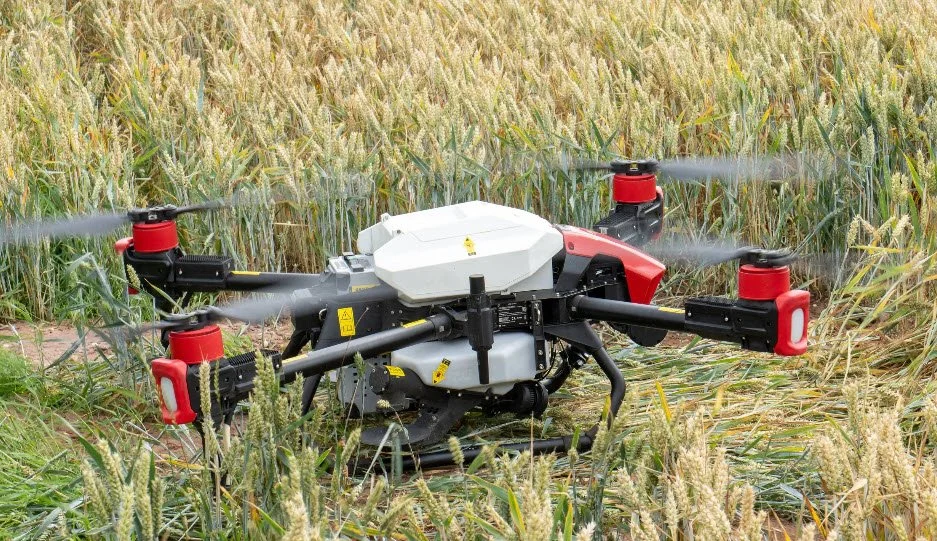
That is where aerial seeding comes in. Drones like the DJI Agras T30 are becoming common sights over UK fields. These are not toys. They carry substantial hoppers, have RTK Correction for centimetre-level accuracy, and can be programmed with Flight Planning Software to follow the contours of the land. I have seen a T30 reseed a steep hillside that a tractor would have struggled to climb without rolling. It took a fraction of the time, and the seed went exactly where the prescription map said it should go. For grassland renovation or cover crops, this kind of broadcast seeding from the air can be remarkably effective, especially when combined with seed coating that helps the seed stay put and germinate quickly.
Another name worth knowing is DroneSeed. They have made a name in forestry and large-scale restoration, dropping seed pods that are designed to protect the seed and give it a head start. The same principle applies to farmland. If you are seeding into standing stubble or a green cover crop, a drone can drop seed without disturbing the soil, which supports No-till Farming principles. No-till is gaining traction in the UK, partly because it builds Soil Organic Matter and reduces erosion, but also because it saves time and fuel. Aerial Seeding fits neatly into that system, allowing you to establish a cover crop or a new ley without a single pass of a drill.
The Practical Side of Drone Spreading
Let me be clear: drones are not a universal replacement for a seed drill. Seed Drilling still does a better job of placing seed at a consistent depth, which is critical for many arable crops like wheat or barley. But for certain jobs, a drone is simply more efficient. Small fields, awkward corners, wet patches, and late-season top-ups are all places where a drone can shine. It also avoids soil compaction. Every time you drive a tractor over a field, you are compressing the soil and damaging its structure. A drone does not touch the ground, so it does no compaction damage at all.
One of the most interesting developments I have seen is Ultra-low Volume Spraying. This technique uses a small amount of carrier liquid, often just water or a light oil, to deliver a precise dose of seed treatment or inoculant. When you are dealing with legume Inoculant, for example, you want the bacteria to stay alive on the seed until it reaches the soil. A drone can spray the inoculant onto the seed just before it drops, which means the bacteria are fresh and viable. That is a huge advantage over mixing thousands of seeds in a hopper days in advance.
Of course, there are trade-offs. The hopper on a drone is small compared to a trailed spreader. You will need to refill more often, and you need a reliable source of seed on site. Battery life is another factor. A T30 can cover roughly a hectare per battery depending on conditions, which is fine for smaller tasks but not for a 50-hectare field in one go. That is why most farmers I talk to use drones for the tricky bits, not the whole farm.
Regulation and Practical Considerations
Flying a drone for agricultural spreading is not as simple as buying one and heading out. In the UK, you need to follow the rules set by the Civil Aviation Authority, and you may need specific permissions depending on the weight of the aircraft and the nature of the operation. The Rural Payments Agency also has rules about how you can use agri-environment schemes, and Natural England sometimes requires specific methods for habitat restoration. It is worth checking with them before you commit to a drone-based approach for a funded project.
Then there is the question of accuracy. GPS Guidance is not just about the drone knowing where it is. It is about the spread pattern. If you are broadcasting seed from 10 metres up, wind can push it off target. That is why RTK Correction is so important. It gives you the same base station precision that a tractor's autosteer uses, so the drone holds its line and you do not get double-planted strips or bare patches. Good Flight Planning Software will also adjust the spread rate as the drone moves, slowing down on headlands and speeding up in the middle, to keep the distribution even.
What This Means for Your Farm
If you are considering adding drone spreading to your operation, start small. Pick a field that is awkward, a steep bank, or a patch you always miss with the drill. Try a cover crop mix or a grass overlay. Keep notes on emergence and establishment. You will quickly see whether it fits your system.
Efficient seed distribution is not a single machine or a single method. It is a combination of the right seed, the right timing, the right equipment, and the right information. Sometimes that means a John Deere drill with variable rate control. Sometimes it means a DJI Agras T30 hovering over a hillside. And sometimes it means walking the field with a hand seeder and a bit of patience. The best operators use all of these tools, matching the method to the job.
For me, the real promise of efficient seed distribution is the flexibility it gives you. You can respond to a weather window quickly. You can reseed a failed patch without disturbing the rest of the crop. You can introduce legumes into a pasture without tearing up the sward. That flexibility is worth a lot when the season is tight.
Looking Ahead
The next few years will bring more integration. We will see drones talking to tractors, sharing maps and data. We will see lighter, stronger batteries that extend flight time. And we will see more farmers building their own prescription maps from drone imagery and soil sensors. That is the direction of travel, and it is good for the land and the bottom line.
If you have been holding off because drones seem like a gimmick, take another look. The technology has matured, the regulations are clearer, and the examples of good practice are growing. Efficient seed distribution is not a luxury anymore. In a season where every seed counts, it is becoming a necessity.